Ratty’s Picnic | A Wind in the Willows Picnic Guide
The Wind in the Willows
Ratty’s Picnic Menu
After a long winter of cozy burrows and tidy spring cleaning, Mole ventures above ground to find sunlight glittering on the river. There he meets Rat, who invites him to spend the day drifting gently downstream. Before they take off for their drift down the river, Rat appears carrying a fat wicker luncheon basket, a treasure chest of simple delights: cold meats, cress sandwiches, rolls, pickles, and bottles of lemonade. You can recreate this same nostalgic experience with a riverside picnic of your own.
‘What’s inside it?’ asked the Mole, wriggling with curiosity.
‘There’s cold chicken inside it,’ replied the Rat briefly;
‘coldtonguecoldhamcoldbeefpickledgherkinssaladfrenchrollscresssandwiches
pottedmeatgingerbeerlemonadesodawater—-‘
‘O stop, stop,’ cried the Mole in ecstasies: ‘This is too much!’— The Wind in the Willows, Kenneth Grahame (1908)
What exactly did Ratty pack in that famous picnic basket?
From Page to Picnic
Here’s your full Wind in the Willows picnic menu, so you can channel Ratty’s love for simple pleasures with a spread of unfussy, traditional English fare. Then keep scrolling to learn more about these foods in Edwardian England.
Wind in the Willows Picnic Menu
Picnic Foods
- Cold Chicken
- Cold Beef
- Cold Ham
- Cold Tongue
- Cress Sandwiches
- Potted Meat
- Salad
- French Rolls
- Pickled Gherkins
Drinks
- Ginger Beer
- Soda Water
- Lemonade
- Jar of Mustard (for serving meats)
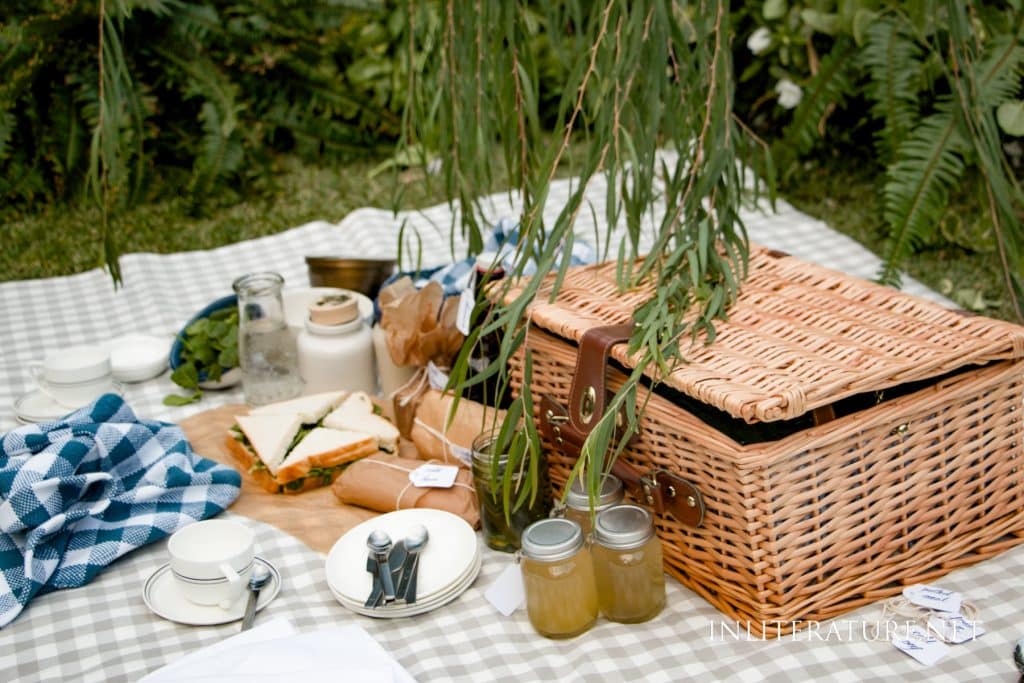
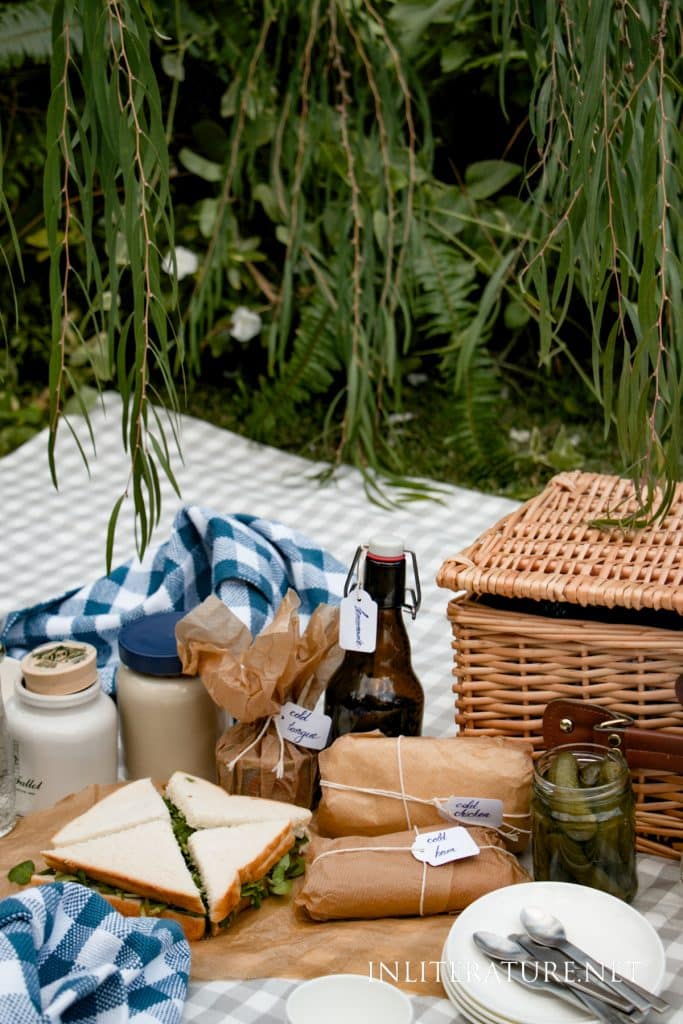
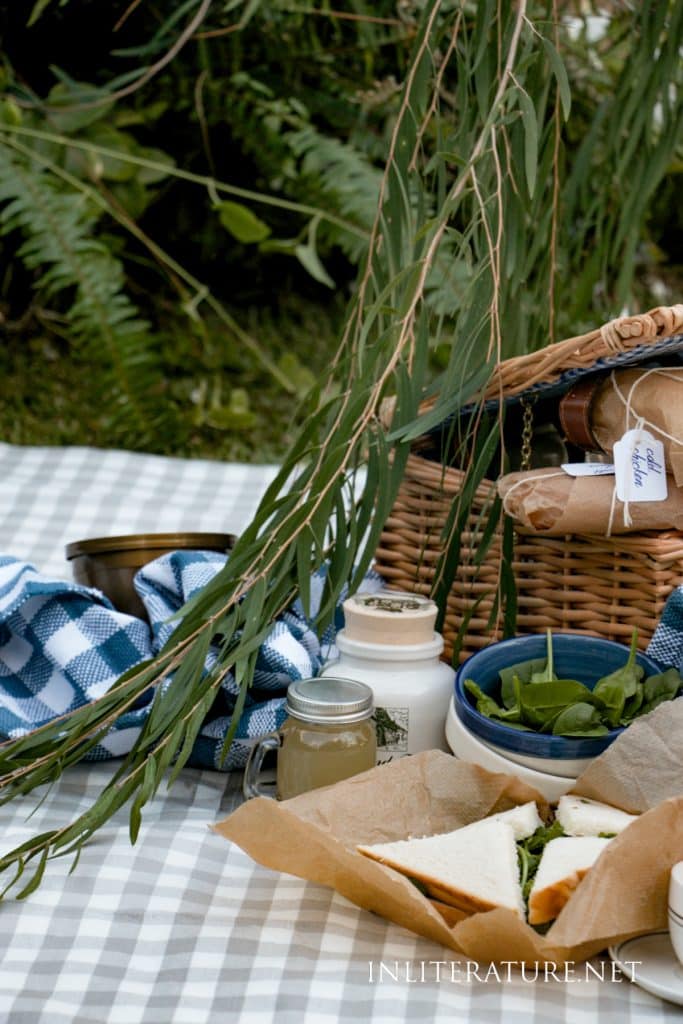
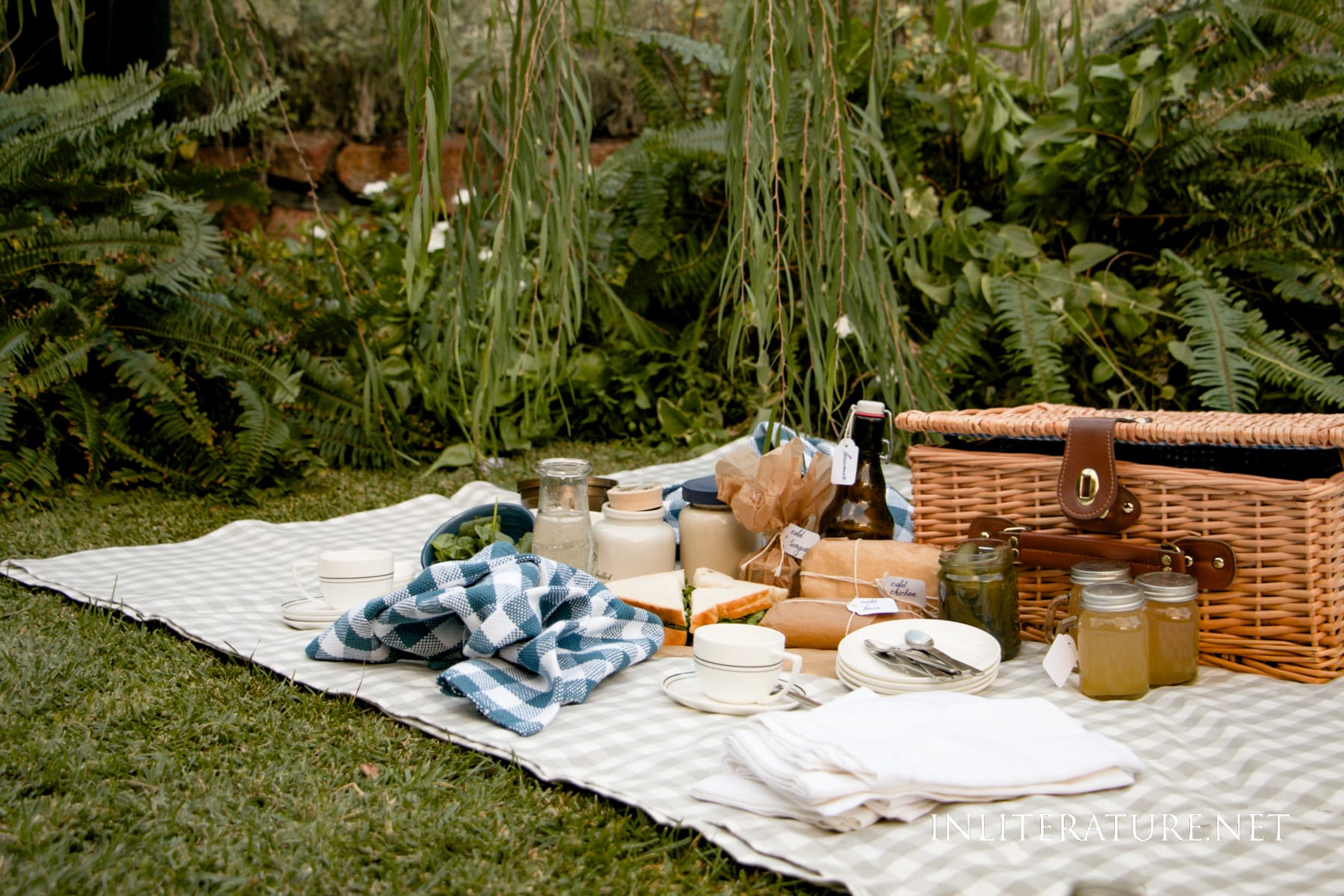
Styling Tip: Wrap foods in brown wax paper, tie them with twine and label with handwritten tags for an old-fashioned touch. Choose a vintage-inspired picnic hamper and enamel plates. Use glass jars and bottles instead of plastic, but wrap them in tea towels to prevent breakage. Tuck in cloth napkins instead of paper towels for a touch of Edwardian elegance.
Historical Tidbits
A peek into Ratty’s picnic basket offers a glimpse into the foods enjoyed during Edwardian England. Some items sounds familiar to us today, while others, like potted meat or cold tongue, might seem a little unusual to modern tastes.
- The cold meats in Ratty’s basket, beef, ham, and chicken, likely came straight from the remnants of a Sunday roast, a cornerstone of English culture. But did you know, in the early 1900s, when The Wind in the Willows was written, refrigeration wasn’t yet common in English homes. These cold meats would have been stored in an ice house or a cool larder.
- Cold tongue was both thrifty and elegant, prepared by salting, brining and slow-cooking beef or pork tongue before slicing it thin for sandwiches or salads. Common in Edwardian households but rare to find in modern picnics!
- Potted meat was another staple, its origins stretching back centuries. Before refrigeration, preserving food meant drying, curing, smoking, pickling, or potting. Meat was cooked, packed into small pots and sealed with clarified fat to keep air out, a technique that gave way to today’s pâté.
- Ratty’s list could mean cress and sandwiches, but I’ve taken it to mean cress sandwiches, simply buttered bread filled with crisp cress, a springtime favourite in Edwardian England.
- It’s worth pausing on that little word cress. Because Ratty and Mole picnic along the riverbank, I lean toward it meaning watercress, a peppery green that grows naturally in cold English streams and was widely gathered in the countryside. By the late Victorian and Edwardian periods, growing and selling watercress had become industry, and was a staple for both the working class and the rural gentry, sold in London markets and transported along the “Watercress Line” railway from Hampshire. That said, cress could also refer to garden cress (Lepidium sativum), a milder, fast-growing herb often used in egg sandwiches and kitchen gardens. Both were common in Edwardian households and Ratty’s “cress sandwiches” could easily have featured either.
- For drinks, ginger beer was a popular non-alcoholic refreshment made by fermenting fresh ginger, sugar, yeast, and water into a naturally fizzy beverage. Soda water often came as powders that fizzed when mixed, a novelty at the time. And lemonade, in its simplest form, was just lemon juice, sugar, and water, a simple option you can easily make at home.
- No English picnic would be complete without a jar of mustard, preferably Colman’s (est. 1814). But take care, English mustard has far more bite than its American cousin, a little goes a long way!
Picnics first gained popularity as a social activity and a ‘pleasurable pastime’ in the early 1800s.
Mrs. Henry Mackarness, in The Young Lady’s Book (1870–4), warned that those attending picnics must be willing to eat “under difficulties.” Victorian picnickers faced uneven ground, gusty breezes, and the occasional startled cow (seriously!) yet they carried on with good humor and full baskets.
Preparation and Tips
Picnic Planning Tips
You can keep your picnic true to Ratty’s Edwardian style while still saving time with a few modern shortcuts. Mix and match these ideas to suit your day, whether you’re dining by the riverbank or in your own backyard.
- Cold meats: For authenticity, roast a chicken the day before and slice leftovers for your basket. Or, if you’re short on time, pick up a pre-cooked chicken or a mix of pre-sliced sandwich meats (chicken, ham, beef) from the deli.
- Potted meat: Traditional versions are hard to find, but pâté makes the perfect stand-in. It spreads beautifully on bread or French rolls.
- Cold tongue: Still available in some British specialty stores, though you can skip it if it feels too adventurous.
- Mustard: Choose a jar of strong English mustard such as Colman’s (est. 1814), but use sparingly! It’s much hotter than American mustard.
- Salad: Keep your dressing in a small jar and toss the salad just before serving so the greens stay crisp.
Preparation and Tips
Preempting Picnic Challenges
Even in Ratty and Mole’s idyllic world, a picnic isn’t without its small mishaps!
- Before setting off, check the weather, not just for rain, but also for wind speed and direction. A strong gust can send blankets, napkins and even sandwiches sailing. If the breeze is up, secure corners with baskets or weights, and keep lids or cloths over your dishes.
- Choose your picnic spot wisely. Avoid areas near stagnant water, which are mosquito magnets, and look for dappled shade instead of full sun. A hot day can quickly make food unappetizing and drinks warm, so pack ice packs and a small thermos of ice cubes to keep things cool.
- For insects, insect sprays can help ward off mosquitoes and a simple tea towel draped over your food keeps flies from treating it like a dance floor.
Sources
- Cunnington, Phillis. English Costume for Sports and Outdoor Recreation from the Sixteenth to the Nineteenth Centuries. Black, 1969.
- Mayhew, H. London Labour and the London Poor. Vol 1, 1851
- Hardingham, Roger. The Mid-Hants Railway : From Construction to Closure. Runpast, 1995.
- Beeton, Isabella, editor. The Book of Household Management … 56th editi, Ward, Lock & Company, 1939.
- Mason, Laura, and Brown, Catherine. Traditional Foods of Britain : An Inventory. 1999.
- Mackarness, M. A. P. The Young Lady’s Book: A Manual of Amusements, Exercises, Studies, and Pursuits. George Routledge & Sons, 1888.
- Davidson, A., et al. The Oxford Companion to Food. Oxford University Press, 2014
- Seymour, John. Forgotten Household Crafts. Knopf, 1987.
- David, Elizabeth. Summer Cooking. Grub Street, 2011.
Ratty’s Picnic FAQs
What foods are mentioned in Ratty’s picnic from The Wind in the Willows?
Ratty’s famous picnic basket is packed with cold chicken, tongue, ham, and beef; potted meat, pickled gherkins, salad, French rolls, cress sandwiches, ginger beer, lemonade, soda water, and a jar of mustard.
What are cress sandwiches in The Wind in the Willows?
Cress sandwiches are delicate finger sandwiches made with buttered bread and fresh watercress, a peppery green common in Edwardian England.
What drink did Ratty and Mole enjoy on their picnic?
Ratty’s basket includes ginger beer, lemonade, and soda water, all non-alcoholic, refreshing drinks popular in Edwardian England.
Is cress the same as watercress in The Wind in the Willows?
Because Ratty and Mole picnic beside the river, it’s likely Kenneth Grahame meant watercress, a peppery green that grows naturally in English streams. However, cress can also refer to garden cress (Lepidium sativum), a softer herb commonly grown and used in sandwiches at the time. Both were part of Edwardian life and Ratty’s “cress sandwiches” could have featured either variety.
What a delightful idea! I do miss having picnics (I think it’s a lost past-time, truly).
I agree. It was so nice to just slow down for a bit :)
This picnic is so charming! I’m encouraged to have one myself sometime. :)
Picnic’s really are nice! Makes us slow down for just a bit :)
Our family (4 generation readers of wind in willows) have been having “rat and mole” lunches forever – just need to take it to the next level and get it in the basket wrapped in the cute paper and string – and then into a hamper. Great idea – what fun to do with the grandkids
Rat really knows his way around his kitchen, pantry and boat. Thanks ever so much for sharing.
Cress is not water cress! It’s Lepidium sativum. Sort of herb. And because cress was always served with egg the “cress” sandwich was to distinguish the “posh” egg sandwiches from any other sort of egg sandwiches without greenery. But otherwise great idea. :)
Thanks for this post and to contributors for The clarifications. Our family heavily quotes and emulates Ratty and Mole on all of our boating excursions (which are largely an excuse to load up the pick-nick basket). Looking forward to refining our spread this weekend! Maurice
Thanks for this great post – what an excellent idea! However, as a proud Englishman, I must say that pate is no replacement for real potted beef. Unfortunately, it is rarely eaten in England these days. It has a texture between pate and rillettes and a strong beef flavour. The main company that sells it today is Binghams http://www.binghamsfood.co.uk/. Thanks for the post – will be trying this soo!.
Thank you so very much for this. We had our picnic today and it was so special. Used some large, empty Bonne Maman jars with the cute checkered tops and put some dressing in the bottom and lettuce on top. Then stirred them at the picnic. Was cute and practical. Loved the cress sandwiches and am so grateful for your ideas about how to do that.
Lovely article, thank you 👍
Just a point, as a Brit, cress just refers to cress, not water cress. It’s usually egg and cress sandwiches, but cress sandwiches are a thing. 😂
Very charming. I stumbled across this delightful post while trying to track down the exact part of Wind in the Willows where Ratty and Mole go on a picnic. I shared your piece to Facebook because I think it is utterly delightful and I think my friends will adore it. Thank you for adding a bit of sparkle to my day. Best wishes from Australia.
PS, I shall now pop over to Instagram and look for you there.❤️